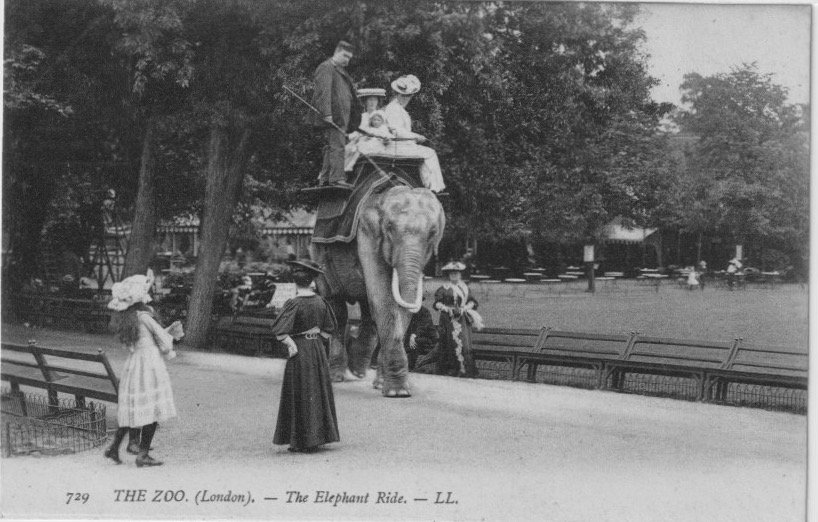
Ethel Bailey’s early 20th-century postcard collection
In the 21st-century, the text has superseded the picture postcard as the smartest way to send a holiday ‘hello’. Instagram is how to dazzle friends with an image from your travels. In truth, the postcard was already in advanced decline. For years it was a lame gesture limping slowly and unreliably to its destination, a bland ‘wish you were here’ scrawled hurriedly on to a cliched image. But what a glorious history it has! At the start of the 20th century, when seaside resorts were fresh and packed with innovative amusements, and trains and steamships whisked Brits to destinations that would previously have taken days or even weeks to reach, the postcard captured the excitement of simply demonstrating that you were somewhere else.
Before 1902, only the address could be written on the flip side of a postcard which mean that any image had to compete for space with the written message. But then the law changed to allow a photograph to cover a full side with the flip side divided into two: the left for a pithy message and the right-hand side for the address. As a result, the enthusiasm for postcards quickly turned into a craze. Images of music hall entertainers, the Royal Family, cartoons and landmark buildings were printed, some in series so you’d buy them one after another. In London, shops sprang up entirely dedicated to selling postcards. They were easy to buy and cheap - a halfpenny - to send, and post was delivered multiple times a day. With telephones not common until the 1930s, this was the best way to have a conversation at a distance, and postcards were sent from home as well as arriving there. They carried brief bursts of news, the sharing of a curious sight, a request or thank-you. By 1910, more than 800 million were being sent out each year and thousands of people had become ‘postcard collectors’, arranging their increasingly colourful haul in decorative albums.
One such collector was Ethel Bailey, a young Londoner who was born in 1888. Between 1904 and 1914. Ethel amassed around 250 postcards that offer a charming view of English seaside resorts in the Edwardian era and beyond. They also show emigration to Canada, major events in San Francisco, the start of the Chinese Republic and Japan’s hidden empire. Equally fascinating are the messages on the reverse, which tell the story of her family’s life at 93 Bouverie Road in Stoke Newington, a fast-growing, free-thinking area of North London.
In 1904, the year she sends her first postcard (and then reclaims it for her collection), 16-year-old Ethel is happily sharing a home crowded with seven other family members, including adult siblings who seem in no hurry to move out. This is perhaps due largely to her mother, Maria, a 54-year-old Londoner who indulges and fusses around her children, urging them all to write the minute they ‘arrive quite safe’ at their holiday resort and slapping tea on the table as soon as they walk back through the brass-knockered front door. Father Horace, 55, a carpenter from Norfolk, is entirely absent from the postcards, so why not picture a hard-working, benevolent Victorian dozing by a toasty but toxic coal fire? Horace junior, 30, is the oldest son. He has followed his father into the carpentry trade and is possibly very similar in character, featuring in one postcard only. Next in line are the big postcard writers: chalk-and-cheese brothers Albert (Alb), 28, a fun-loving chap who works for a tea merchant, and serious-minded, inquisitive bank clerk Alfred (Alf), 24. Ethel is closest to her older sister Emily, 19, whose work is to help run the household and who seems like a younger version of her mother, which endears her to her cosseted brothers. Ethel’s only younger sibling is Edwin (Ted), 14, cheeky and energetic and on his way to a career as a clerk in the spirits trade. Missing from home is James (Jim), 26, who works as a purser on merchant ships - in the years before the merchant navy officially existed. Ethel herself is an affectionate, straightforward girl with a bunch of friends and a taste for fashionable Brighton, who works from home as a sewing machinist. She seems to have fewer household duties than her sister, and is perhaps a bit too young to be of much interest to her brothers.
The family’s late-Victorian house is one of a row of attractive, sizeable homes on broad, leafy Bouverie Road, which lies just off the main thoroughfare Stoke Newington Church Street. They were built to meet demand from newly middle-class craftsmen and office workers, the roles that Ethel’s brothers have been educated for. Other members of the family were attracted to them too. In the 1890s, Ethel’s mother’s brother Thomas Davy and his wife Eliza had lived at No 100 with their seven children. And Ethel’s grandparents, who ran a successful coffee house, had retired here. The 1891 census shows Horace and his oldest cousin Eliza Clara spending time with Grandma and Grandpa at No 46. However, life could be very precarious 130 years ago and, in 1892, Eliza Davy died aged 48, leaving Eliza Clara, 23, Ann, 21, Frances Ada, 19, Thomas G, 17, Lucy, 15, John, 13, and Henry, 11, without a mother. Several years later, their grandparents had died, their own house had new residents and their father had remarried an Essex woman. The children were scattered, some left in the care of their eldest sister Eliza Clara. It seems that warm-hearted Maria kept a concerned eye on the siblings, and five of them feature strongly in Ethel’s postcards, their narratives of uncertainty and aspiration lacing through the Baileys’ happy, solid London lives.
Ethel’s collection tapers out as World War I begins - as did the fashion for fun postcards, which suddenly seemed frivolous and gave way to cards depicting military activity and soldiers in uniform. These were much-needed lifelines between fighting men and their anxious families, but Ethel didn’t collect them. Her cards, and those sent to her sister and mother who passed them on to her, speak of happier times.
Fast forward 50 years to the early 1970s. A young woman, Pearl, moves in to Bouverie Road, a couple of doors up from No93. She befriends two elderly neighbours, Miss Price and Miss Bailey, who enjoys showing her a collection of lovely old postcards, eventually pressing her to keep them so she knows they have been safely passed on to someone who appreciates them. They have been treasured ever since, and some of the postcards are shown here with Pearl’s kind permission. There is no written information in the albums at all, but with a lot of research and a little bit of guesswork, we are building up snapshots of the Baileys’ life and times. If anybody recognises the people featured or has extra information to offer please do write to us at ATripUpMySleeve@gmail.com. We would love to hear from you.
Beside the seaside
-
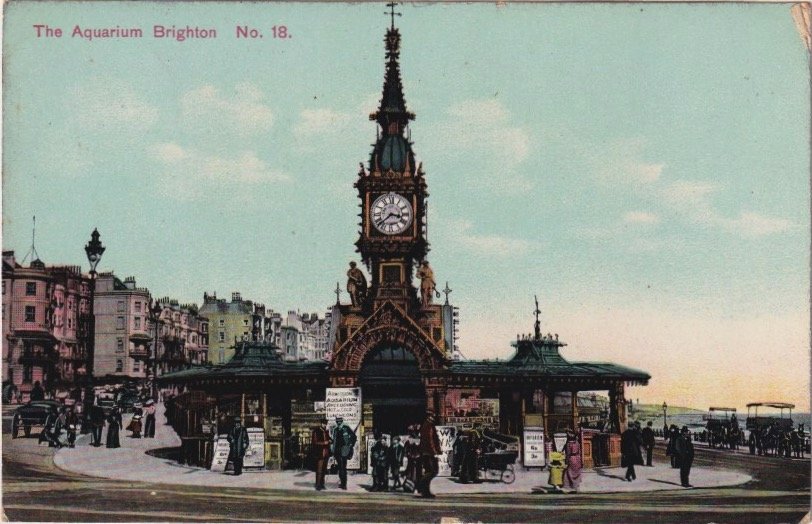
Ethel's first fling, Brighton, East Sussex, August 14 1904
This is the postcard that Ethel placed at the top of the first page of her album. It shows what was most likely her first ‘grown-up’ holiday, at 16 years old, to Brighton. She writes home to her older sister Emily in a functional, frill-free piece of communication: “Dear Em, Coming home by first train. Tell Mum to have my dinner ready about 12.30 I think. Yours Ethel.” The postcard shows Brighton Aquarium, which opened in 1872 and had exhibited, at various times, an octopus, a Norwegian lobster and a ‘real live mermaid’. It’s now SEA LIFE Brighton.
-

-
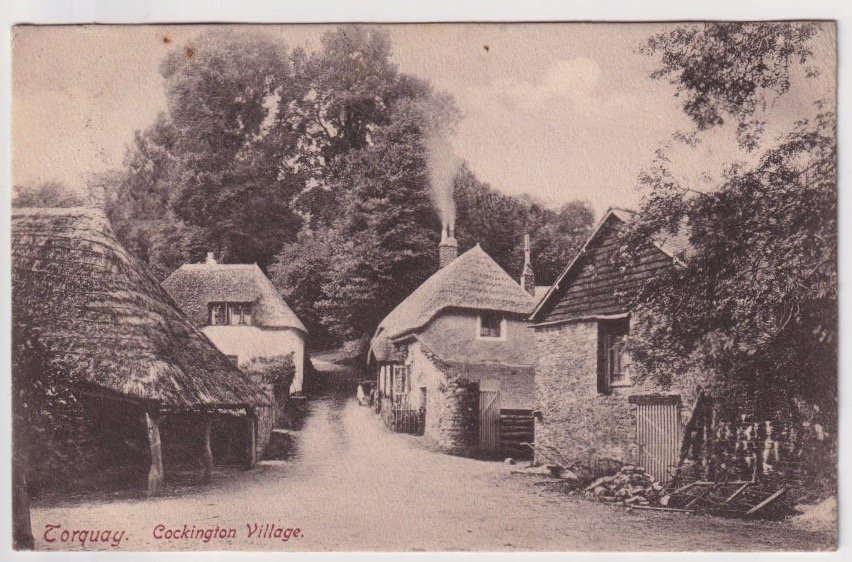
Cockington, Torquay, Devon, August 17 1904
In 1904, a trip out in a motor car (travelling at up to 20mph) was a fashionable holiday highlight. A survey at Bournemouth, along the south coast from Torquay, counted 800 over a four-day long weekend. This postcard from ‘a.d.’- who we think is Ann Davy, Ethel’s cousin - shows she’s on-trend with just one short sentence: “We are going to drive to this place tomorrow morning”. Cockington village’s thatched cottages are still a tourist attraction.
-

-

The New Forest, August 17 1904
Twenty-four-year-old bank clerk Alf takes solo holidays in which he explores coast and countryside, and always sends postcards to his sister Emily. The two seem close. Along with their mother, she is at the centre of communication in the house so is certain to show them around. Alf has a dry, informative style of communication, and writes from Brockenhurst in The New Forest: “Sunday noon. Dear Em, Many thanks for your PC. The weather here has been very hot until yesterday which was very dull but today it is again very hot. I am enjoying myself immensely. I am going to Bournemouth this afternoon. The SWR run cheap excursions every day. Yours affec, Alf” The reference to SWR is likely the London & South Western Railway, which ran from 1838 to 1922.
-

-

Downwards from Devon, July 19 1905
Alf is on a walking holiday to North Devon and Cornwall which begins well but seems to deteriorate as he heads south. Day one is spent in Ilfracombe: “Wednesday. Dear Em, This is a splendid place. We went to walk along the cliffs yesterday which are very fine, the rock scenery especially, yours, Alf”
-

-

Bideford, North Devon, July 20 1905
“Wednesday [it was sent on Thursday]. Arrived here about noon & walked to Westward Ho, a one eyed place with about half a dozen houses. After I posted my last card I remembered that I hadn’t stamped it, sorry. Alf”
-

-
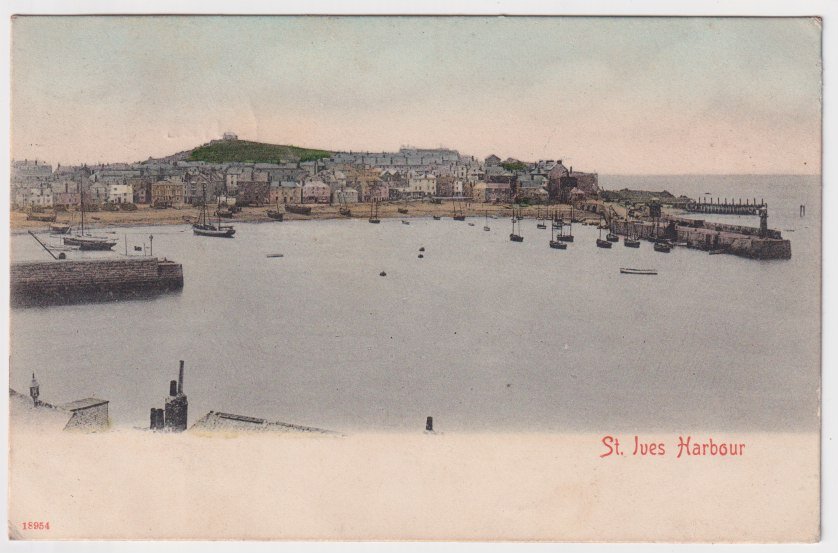
St Ives, Cornwall, July 23 1905
“Saturday. Sorry I could not get a better P.C. We intended stopping at Redruth tonight but it was such a dirty place, full of mines, that we decided to push on to this place. It is very dull & misty here, quite a contrast to yesterday’s heat.”
-

-

Mullion Cove, Cornwall, July 25 1905
“Monday. Just walked here from Helston (7m) where we arrived from Lands End. We left Lands End in the rain this morning & came back to civilisation. We are stopping at Helston 2 nights to enable us to visit the Lizard tomorrow. Alf”
-

-

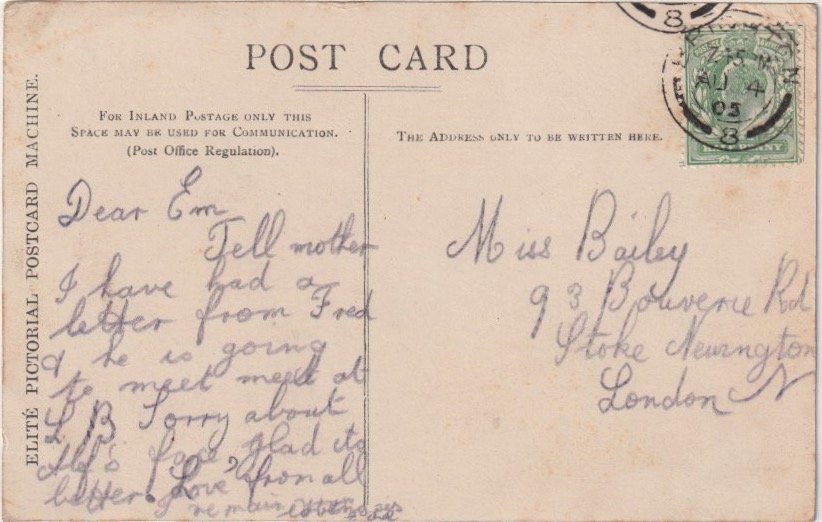
Brighton, East Sussex, August 4 1905
Now 17, Ethel is back in Brighton. “Dear Em, Tell Mother I have had a letter from Fred and he is going to meet me at LB. Sorry about Alf’s face, glad it’s better. Love to all, remain your loving sis, Ethel”. Firstly, what happened to Alf’s face on his hit-and-miss walking holiday in the South West? Our money is on sunburn or bee stings. Back to Ethel’s postcard: Fred, who has offered to meet her off the Brighton train at London Bridge Station, hands over postcards sent to his home for her collection. In doing so allows us to discover from censuses that he is Fred Ellis, a teenage warehouse clerk from Stamford Hill, which neighbours Stoke Newington.
-
-
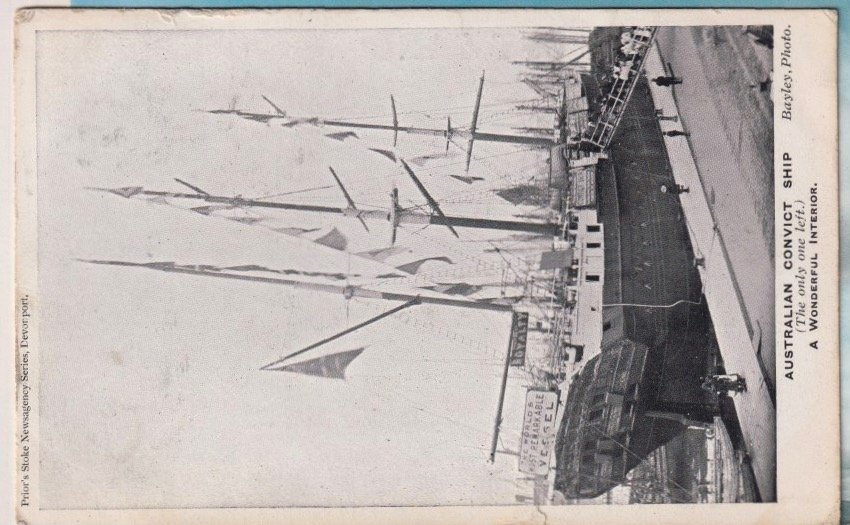
Em & Ada's Weymouth jaunt, September 4 1905
Emily, 20, is on holiday in Dorset with another cousin, Ada (we are pretty certain this is Frances Ada, who had also lived in Bouverie Road). This postcard, titled ‘Australian convict ship (The only one left). A Wonderful Interior’, shows a grim tourist attraction on Weymouth harbour. It’s a prison ship that transported English convicts to colonial Australia in a practice that had ended only 37 years earlier. She writes to her mother: “Just been over this ship & feel very frightened. It gave us the horrors. Em.”
-

-

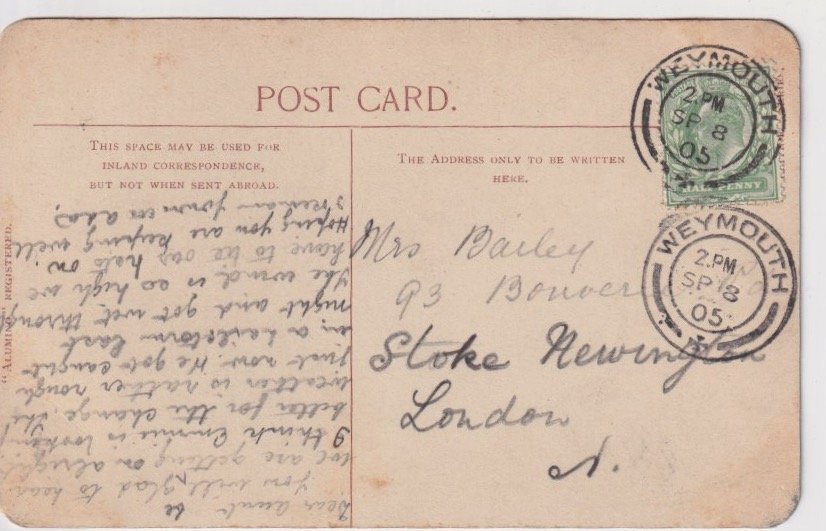
Weymouth, September 8 1905
It’s Ada’s turn to write from Weymouth with a shimmering silver card on which she has written her message upside down - for privacy perhaps, which was a concern with postcards at the time. We learn that Emily has been unwell and what follows will not reassure Ada’s Aunt Maria. “Dear Aunt, You will be glad to hear we are getting on alright. I think Emmie is looking better for the change. The weather is rather rough just now. We got caught in a hailstorm last night and got wet through. The wind is so high we have to tie our hats on. Hoping you are keeping well. I remain yours etc Ada”. Her more formal sign-off suggests she’s new to postcard writing.
-
-
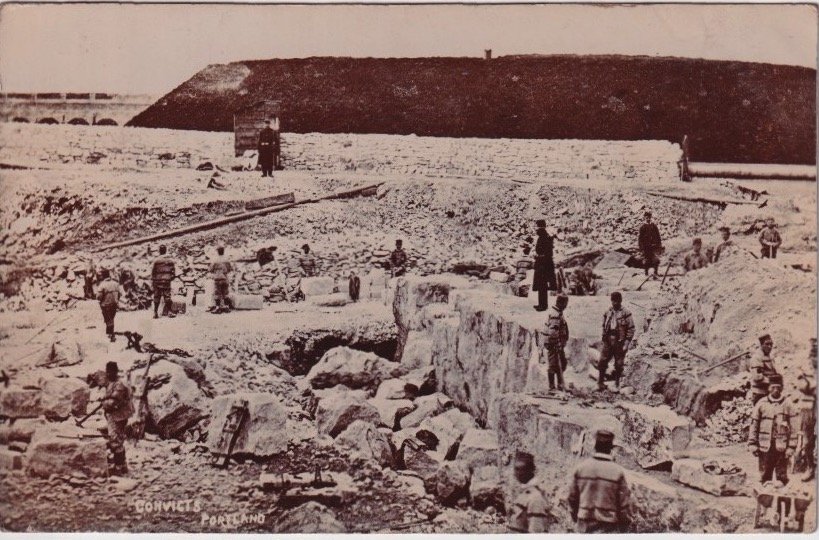
Hard labour at Portland, September 12 1905
Emily’s postcard to Ethel from Weymouth again shows an interest in life’s darker side. She and Ada are visiting Admiralty Quarries, which produced Portland stone using convict labour - shaven-headed men from Portland Prison working in chains. Emily writes: “We saw the quarries and the prison but did not see the convicts at work as it was Sunday (they do not work on Sunday). It was a dreadful hill to climb. I would not climb it again at any price. Lovely day today, sun shining and no wind. Hope it will last. Love to all from Em.”
-

-

Aberystwyth, Ceredigion, July 20 1906
A classic Alf postcard! He writes to Emily from a trip to Wales: “Rhayader Thursday. The Birmingham Corporation get their water supply from here. It is sent through pipes to B’ham 85 miles away. Alf”
-

-

Barmouth, Gwynedd, July 23 1906
Alf is now travelling north up the West Wales coast: “Barmouth, Monday. We cannot see much of this place as the hills all round are covered with a thick mist.”
-

-

The Norfolk Broads, July 20 1907
“Another one for your album. What???” A jokey message to his youngest sister from tea merchant’s clerk Albert, 31, who’s at the Wroxham Regatta, shows that postcard collectors are now a phenomenon - and that Ethel is one of them.
-

-
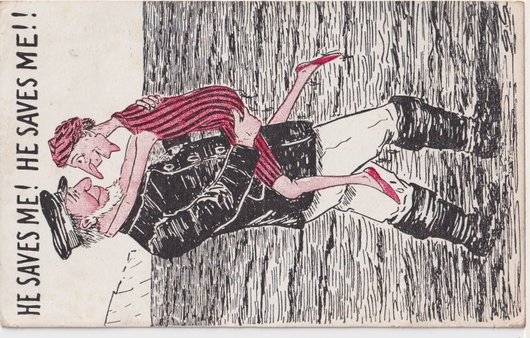
He saves me! August 8 1907
Ethel is holidaying at Great Yeldham village in Essex. She has sent a postcard to a friend Ria in Stoke Newington, who replies with this cheeky one: “Dear Ethel,” she writes. “Glad you are enjoying yourself, keep on doing so. Miss [indecipherable] thanks for card, don’t you wish you were in Brighton so you could be clasped in the arms of a [indecipherable] fisherman. Love Ria”.
-

-

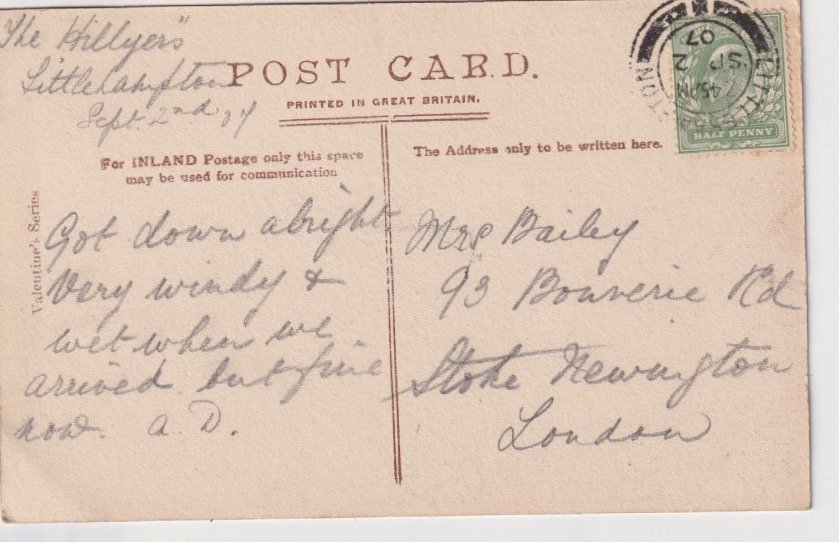
Littlehampton, September 2 1907
A view of the harbour from the golf links. “Hillyers, Littlehampton, Sept 2 07. Got down alright, Very windy & wet when we arrived but fine now. A.D.”
-
-
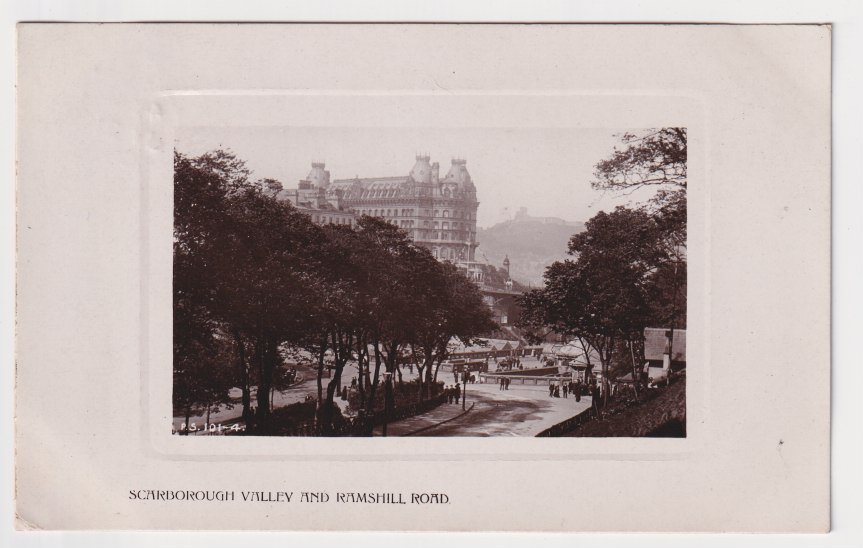
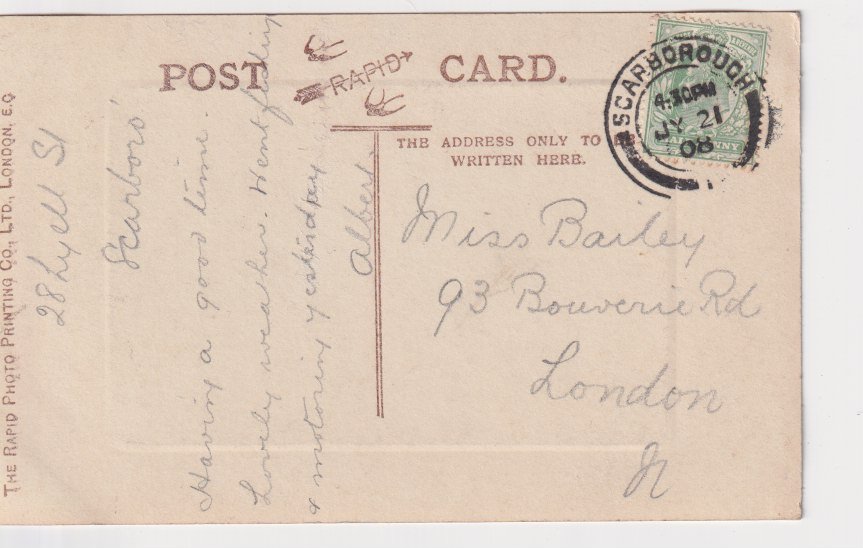
Up North: Scarborough, Yorkshire, July 21 1908
Albert’s cards are full of life, written in a direct, often humorous style. He tells Emily: “Having a good time. Lovely weather. Went fishing and motoring yesterday. Albert.” The resort of Scarborough’s impressive Grand Hotel, shown in his postcard, lured southerners up to the Yorkshire coast on the train. It was the largest hotel in Europe when it opened in 1867, and every room had a bath that could be filled with chilly sea water. Albert’s in humbler digs - 28 Lyell St, Scarborough, a little terraced lodging house.
-
-

17-year-old Ted cycles to the sea: Brentwood, Essex, July 1 1908
The day before his 18th birthday, Ted has set off to cycle to Great Yarmouth from his North London home - a distance of 110 miles as the crow flies. He has set a schedule for his coming-of-age adventure. But at 9.50am on July 1, he writes from Brentwood in Essex: “Dear mum, arrived Ilford 8.50 - 10 minutes late: arrived here 15 minutes late. The wind is blowing very strong against me but I am feeling allright. Ted. This was written in my saddle.”
-

-
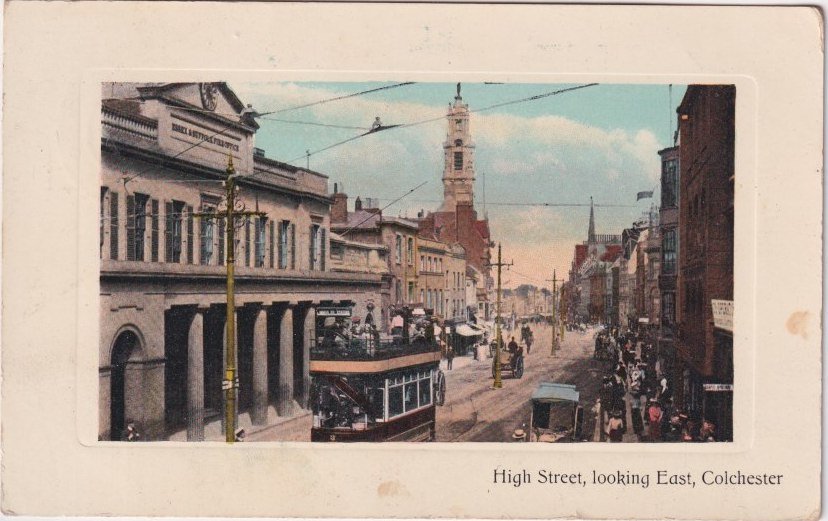
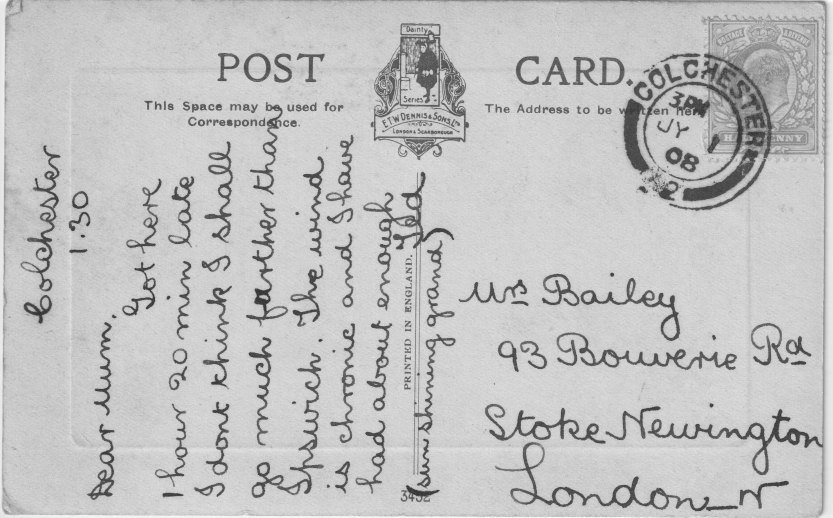
Ted reaches Colchester, Essex, July 1 1908
Ted’s enthusiasm is flagging: “Colchester 1.30. Dear Mum, Got here 1 hour 20 mins late. I don’t think I shall go much farther than Ipswich. The wind is chronic and I have had about enough. Ted (sun shining grand).” Trams such as the one shown on the postcard operated in Colchester town centre between 1904 and 1929.
-
-
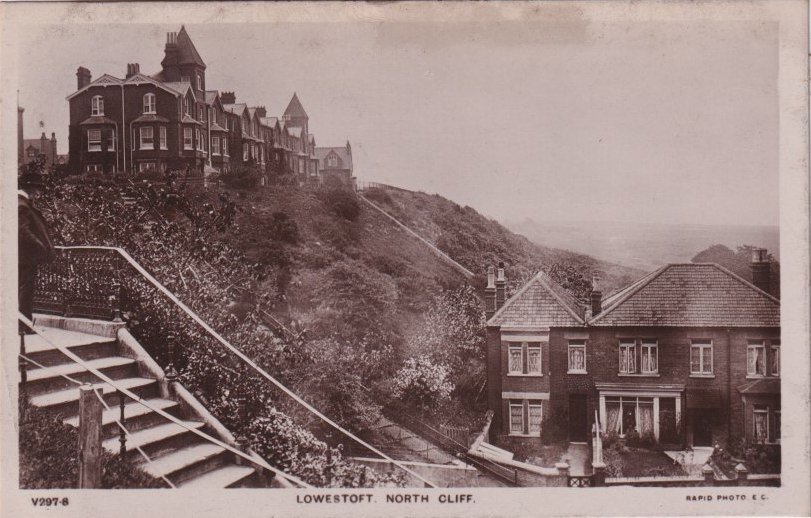
Almost there: Lowestoft, Suffolk, July 2 1908
It’s 9.30am on Ted’s 18th birthday. We don’t know where he spent the night, but he has rallied and hit the Suffolk coast. He writes, rather cockily: “Dear Em, Tell mother to send my things when she gets my card from Yarmouth and when you write tell me how many presents I have had. Ted.”
-

-

Ted arrives in Great Yarmouth, Norfolk, July 2 1908
He made it! At 1.15pm Ted writes airily from Yarmouth: “Dear Mum, Please send my things to me c/o Mrs Bamfield, 156 Blackfriars Rd? St, and if you could send me another shirt besides the stiff cuffed one I should like it as this one is dirty.” The card shows one of the steamers that, until World War I, ran between Great Yarmouth and the Thames in London, and perhaps suggests that he was tempted to take the easy way home.
-

-
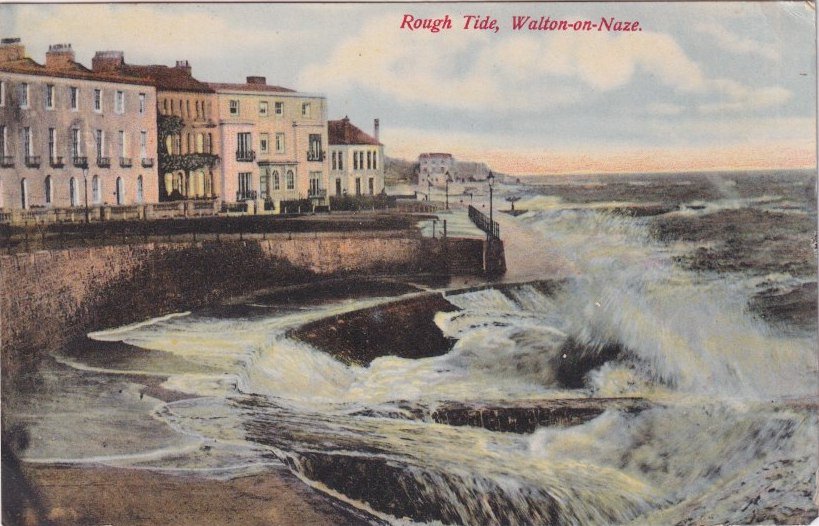
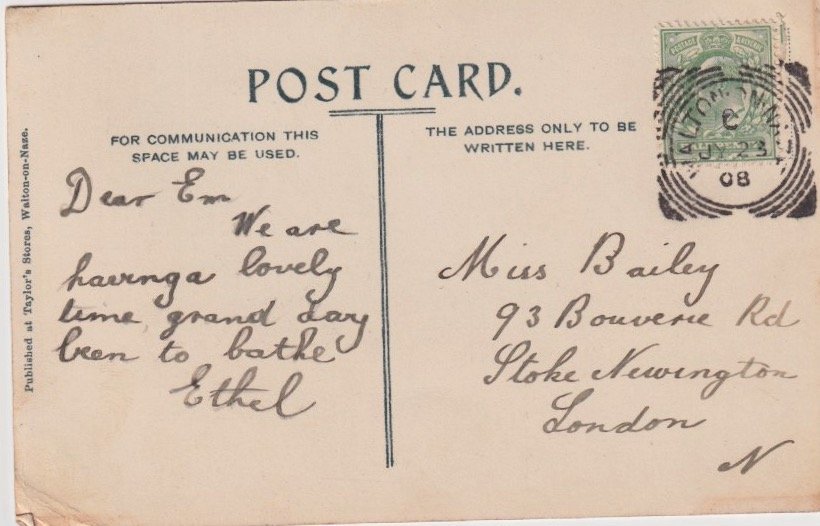
The North Londoner's getaway: Walton-on-the-Naze, Essex, July 23 1908
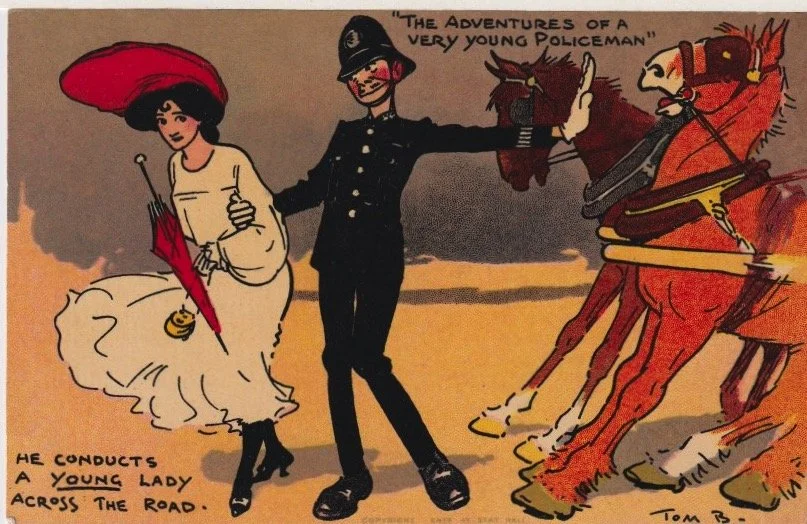
North London’s closest holiday resorts were raucous Southend (see the postcard below left) and its calmer neighbour Walton-on-the-Naze. Ethel has taken a break here even though she has another holiday to Brighton coming up. She writes, “Dear Em, We are having a lovely time. Grand day, been to bathe. Ethel.”
-
-

-
-
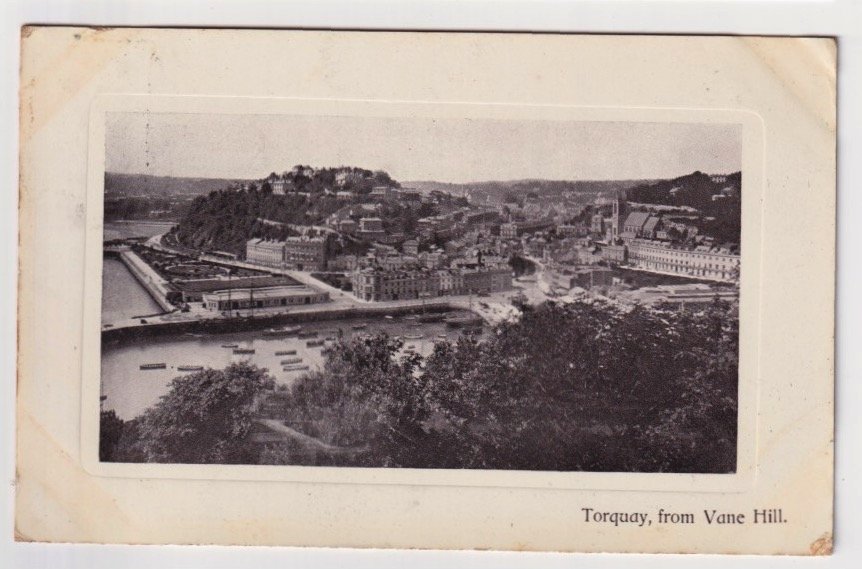
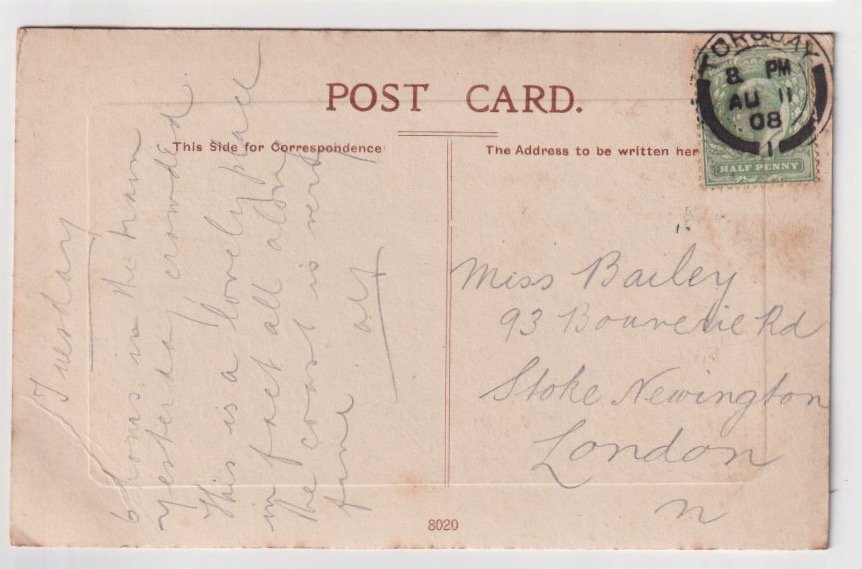
Torquay, Devon, August 11 1908
“Tuesday. 6 hours on the train yesterday, crowded. This is a lovely place, in fact all along the coast is very fine. Alf”
-
-
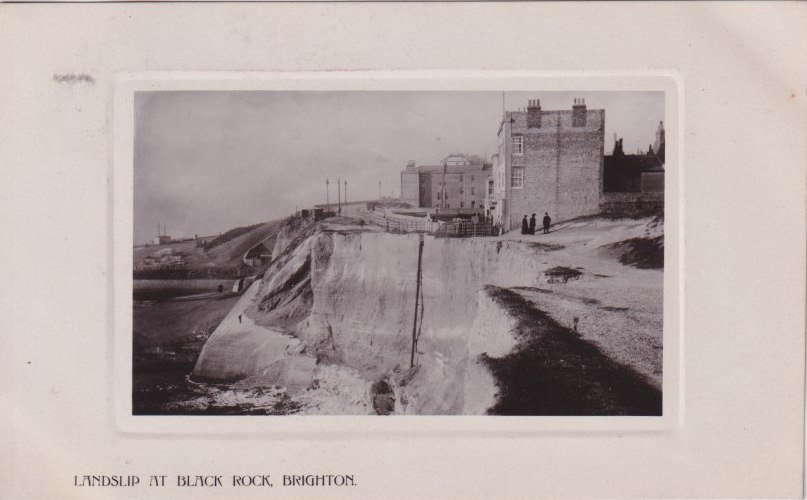
Back to Brighton, August 8 1908
Ethel, who’s now 20, has visited Brighton for the last four years and adopts a slightly superior tone about her friend Flo’s excitement at seeing it for the first time. “Dear Em,” she writes. “Arrived safe about 4.30, three others in room. Flo can’t get over the wonderful sea. All she keeps saying is ‘Oh, ain’t it grand, ain’t it lovely.’ Ethel”. The girls’ accommodation seems to be hostel-style, sharing with other girls.
-

-

Postcard angst, August 13 1908
Ethel is fretting in Brighton: “Dear Em, I have sent 18 postcards & not had one single card in return. Still enjoying myself. Yours, Ethel.” Her postcard shows the Volk’s Electric Railway, which opened on the seafront in 1883 and is still running..
-

-

Herne Bay, Kent, August 14 1909
Ethel is visiting a new resort this year. “Dear Mum, Arrived quite safe. In room with Bessie and Daisy. Think I shall like it very much. Am going to send my bag home by Carter as my hand is blistered with carrying it. Love to all, your loving daughter, Ethel”.
-

-

Seaside chic in Portsmouth, August 20 1909
In 1909, Ada writes in typically sparky style from Portsmouth’s elegant South Parade Pier, which has been newly rebuilt after a fire the previous year. “Dear E, We are getting such dreadful weather, the wind is fearful and the rain coming down in torrents. There are plenty of concerts going on. We have a nice room. Love to all. From Ada.” She sends the postcard above right, showing the beach and bathing huts to Ethel on the same day with further complaints about the weather.
-

-

Family favourite: Great Yarmouth, Norfolk, August 30 1909
Great Yarmouth is a big favourite with the Bailey siblings. Perhaps, since their father is from Norfolk, they holidayed here as children. Whichever of them visits, they always send back a box of bloaters (smoked, ungutted herrings) for their mother. Emily’s postcard to Ethel illustrates her central position in the family and interest in all they are doing: “Dear E, What is the weather like in London, it is very cold & showery here, it was lovely yesterday though, I got burnt up. It is the regatta today, going to have fireworks on the pier tonight, just going to have a look at the fun. Em. Just had a card from Alf in Snowdon. Write and tell me all the news.”
-

-

Great Yarmouth, Norfolk, September 9 1909
The Norfolk resort is where the liveliest Bailey brothers let their hair down. Now 19, Ted is getting in the swing of things: ”Yarmouth Sunday. Shall be home Wednesday night some time. Ted.”
-

-
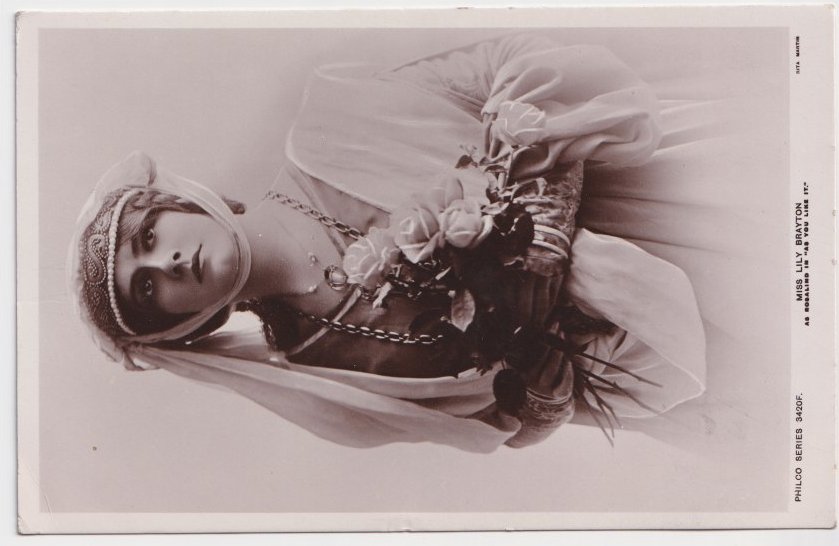
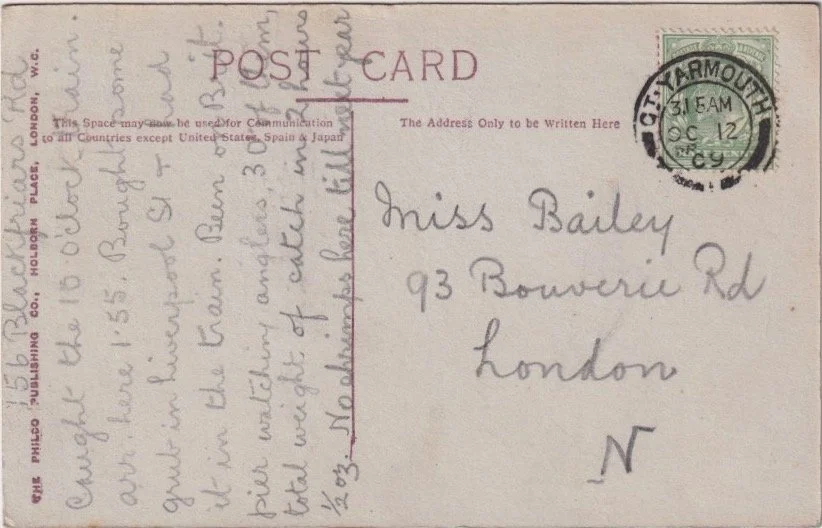
Albert hits town: Great Yarmouth, 3.15pm October 12 1909
Albert writes to Emily: “Caught the 10 o’clock train. Arrived here 1.55. Brought some grub in Liverpool St & had it on the train. Been on Brit Pier watching anglers, 30 of them, total weight of catch in 2 hours 1/2oz. No shrimps here til next year.” It was usual to send postcards of singers and entertainers - Ethel has more than 40 in her collection. Lily Brayton co-managed the Ambassadors Theatre in London and performed in Shakespeare productions there.
-
-

Later... Great Yarmouth, 8pm October 12 1909
Five hours later, Albert is mulling over his holiday entertainment. He writes again to Emily: “There are only three shows going this week. The Gem, Hippodrome & H.L.A.T.H. at The Aquarium. Roller skating, Winter Gardens, Scenic Ry still going. Just off to The Gem.” Scenic Ry probably refers to a Scenic Railway that had opened earlier in the year, Maidie Andrews, shown in Alb’s postcard, was a child actress who was touring in Peter Pan in 1909.
-

-

And another thing... October 13 1909
An intriguing postcard from Albert to Emily on the following day: “I think it would be a good idea if you sold all that old stock, so that I could get some fresh when I come back. What??” This suggests that Emily is involved in a business set up by tea merchant Albert. Or is it perhaps a side hustle?
-

-
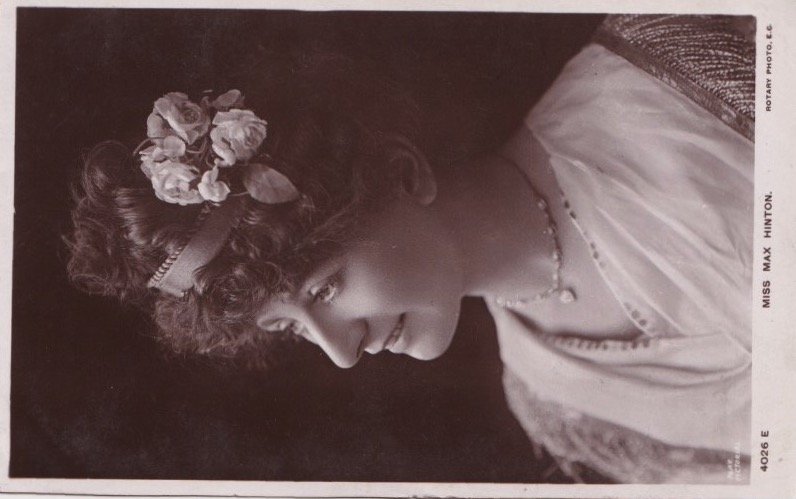
Albert's back: Great Yarmouth, July 23 1910
The following year, Albert writes to Emily: “Wednesday. Will send Mum some bloaters this week. At present I am listening to the Pierrots. There is a bloke singing about Sexton Blake. A.” Troupes of pierrots - Continental-style performers in white make-up - were a familiar sights at the seaside. Sexton Blake was a fictional detective who featured in various magazines including Penny Pictorial. Miss Max Hinton, shown in the postcard, unfortunately is a total mystery!
-
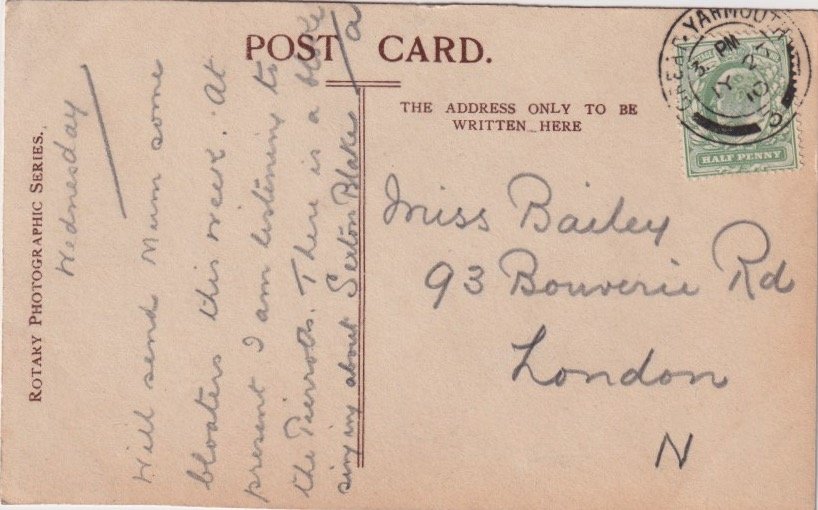
-

And again: Great Yarmouth, July 19 1911
Some interesting companions on Alb’s 1911 holiday: “We have had part of the fleet here since Sunday. 5 battleships, 4 cruisers, 5 torpedo boat destroyers, 3 submarines.” Billie Burke, the actress who features on this postcard, iater became part of film history as as Glenda the Good Witch in the Wizard of Oz. She had been performing in London for most of the early 20th century.
-

-

Portsmouth Harbour, August 10 1910
By now, most of the family have a favourite resort. Ada’s is Portsmouth. “Dear E, Just got back from a nice bike ride all in the rain coming back. Am now off to the Kings Music Hall. Love from Ada. Lucy and I are going to come Sunday if fine.” A Sunday visit surely means that Ada and Lucy are sisters and two of the Davy siblings Then three years old, the Kings Theatre is still going strong in the 21st century.
-

-
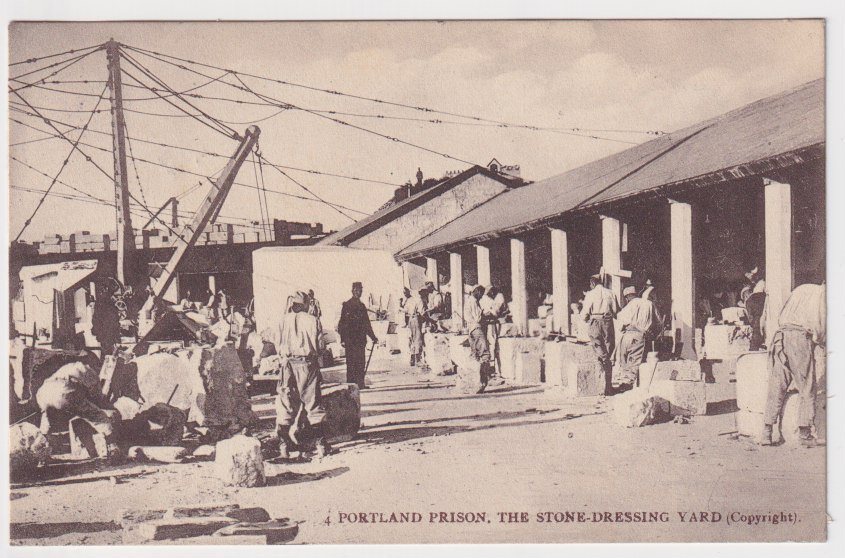
Return to Portland Prison, August 31 1910
Alf is on the Dorset coast and has been to view Portland Prison, with better timing than Emily had in 1905. The prisoners quarrying Portland stone under hard labour conditions seem to be quite the tourist attraction: “Went here today and saw the poor devils at work from the window of a pub overlooking the wall. Alf”
-

-
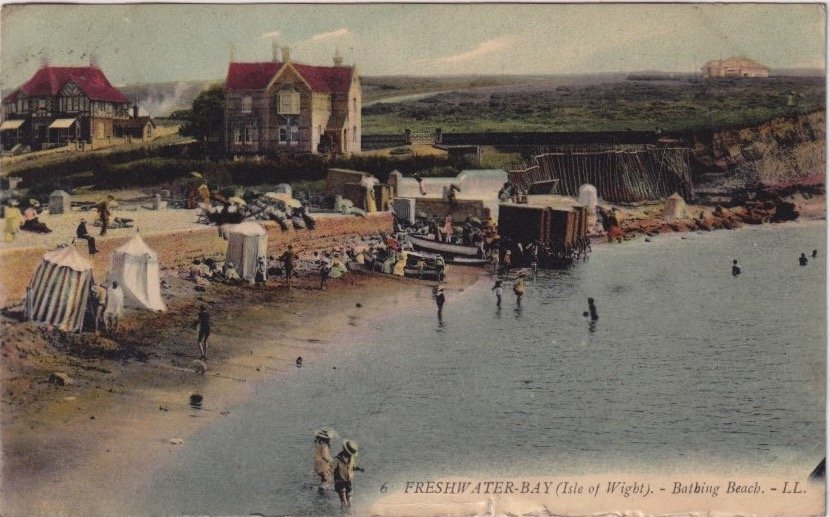
Freshwater Bay, Isle of Wight, July 4
Queen Victoria’s favourite holiday island captures Ethel’s heart. She writes: “Dear Emily, Simply lovely here. You would love it. Love Ethel.” Although the date is obscured here, the year must be 1911 or later as this is the year George V stamps were first used.
-

-
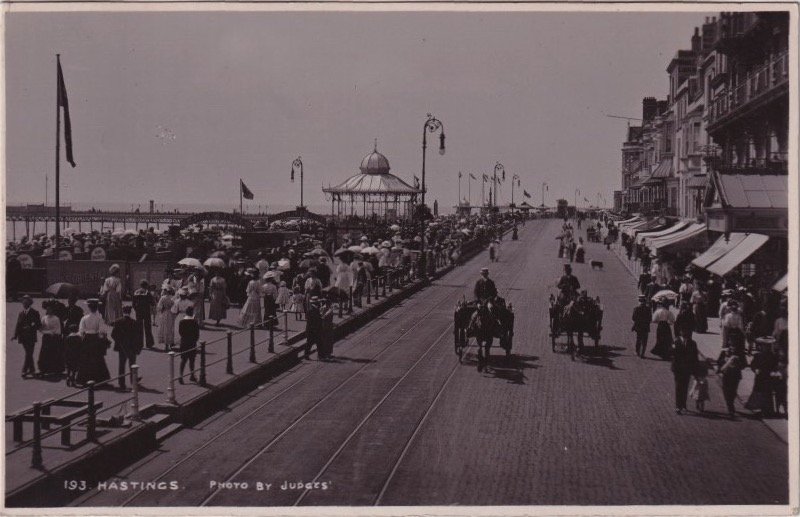
How to do Hastings: East Sussex, August 6 1912
Emily writes home from the Bohemia district of Hastings where she has lodgings with a “nice old girl’. She quickly receives a reply from Alf, who has travelled most of the south coast by now and offers some advice: “Don’t forget to go to Fairlight or Ecclesbourne, they are better than Bexhill. Did you notice at Bexhill that everything belongs to Earl de la Warr? It did when I went. Alf.” In 1935 the De La Warr Pavilion will become Bexhill’s major landmark.
-

-
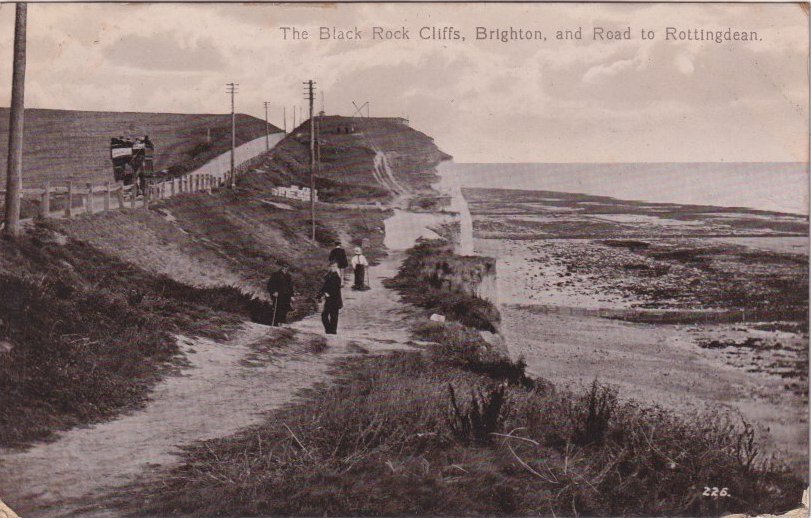
Brighton, July 26 1913
Finally, having heard all about it from Ethel for the previous nine years, 63-year-old Mrs Bailey takes her turn on Brighton prom. She writes to her eldest daughter: “Dear Em, Arrived quite safe. Lovely weather. I think I shall like Brighton. Nice lodgings and landlady. Love from Mum.” Is Mr Bailey there too? We hope he is parked comfortably on a deckchair watching Sussex waves foam across the cobbles.
-

-

Southampton, June 8 1914
Less than two months before the start of WWI, 23-year-old Ted is on a carefree cycling holiday on the south coast and is mixing activity with entertainment in Southampton. He writes: “(88 miles) Dear Mum, Arrived here OK at 6pm. Had rather heavy local showers all the way, did the last 2 miles in 7 minutes & arrived 5 minutes ahead of a big thunderstorm. Tell Horace I am going to see HMS Goliath??? tonight & Haley’s Juveniles.” One of the performers in Hayley’s Juveniles, a children’s singing troupe, was a certain Gracie Fields.
-

Part 2: Maybe it’s because I’m a Londoner